What Happened
On February 6, 2026, Nitin Bhat — Senior VP and general manager of Heroku at Salesforce — published "An Update on Heroku" on the official blog. The title was diplomatic. The content was not: Heroku is entering "sustaining engineering" mode, meaning no new features, no new Enterprise contracts for new customers. In plain terms, Salesforce has moved Heroku into hospice care — keeping it alive, but with no plans for recovery.
Bhat's money quote: "We're focusing our product and engineering investments on areas where we can deliver the greatest long-term customer value, including helping organizations build and deploy enterprise-grade AI." The "greatest long-term customer value," of course, is Agentforce.
What End of Sale Actually Means
| Customer Type | Impact |
|---|---|
| New enterprise customers | Cannot purchase Enterprise Account contracts — door is closed |
| Existing enterprise customers | Contracts can be renewed at current terms |
| Credit card (pay-as-you-go) customers | Business as usual, no changes |
| New feature development | Stopped. Only PostgreSQL updates, security patches, and reliability fixes continue |
Notice the careful wording: End of Sale, not End of Life. Salesforce hasn't announced a shutdown date. But the trajectory is unmistakable. Independent analyst Michael Warrilow put it bluntly: "Developers loved Heroku. Exorbitant pricing killed it and Agentforce put the nail in the coffin."
A Brief History: From Developer Paradise to Strategic Orphan
Heroku launched in 2007, initially supporting only Ruby. At a time when deploying a web app meant fighting with servers for hours, Heroku made it as simple as git push heroku main. This wasn't incremental improvement — it was a paradigm shift. PaaS as a category was essentially defined by Heroku.
Salesforce acquired Heroku in 2011 for $212 million. That looked expensive then; it looks like a bargain now. At its peak, Heroku hosted over 65 million apps processing 65 billion requests per day. But Salesforce's post-acquisition strategy was puzzling: it neither deeply integrated Heroku into the Salesforce ecosystem nor gave it enough resources to thrive independently. Pricing crept higher and higher, losing ground to AWS, GCP, and newer alternatives. The developer community slowly drifted away.
Former Heroku product engineer Blake Gentry reflected: "Salesforce gave Heroku a ton of funding to build out a vision that was way ahead of its time." The problem was that vision never translated into a shipped roadmap.
Fir and Vibes: Hope Arrives Just in Time to Be Shelved
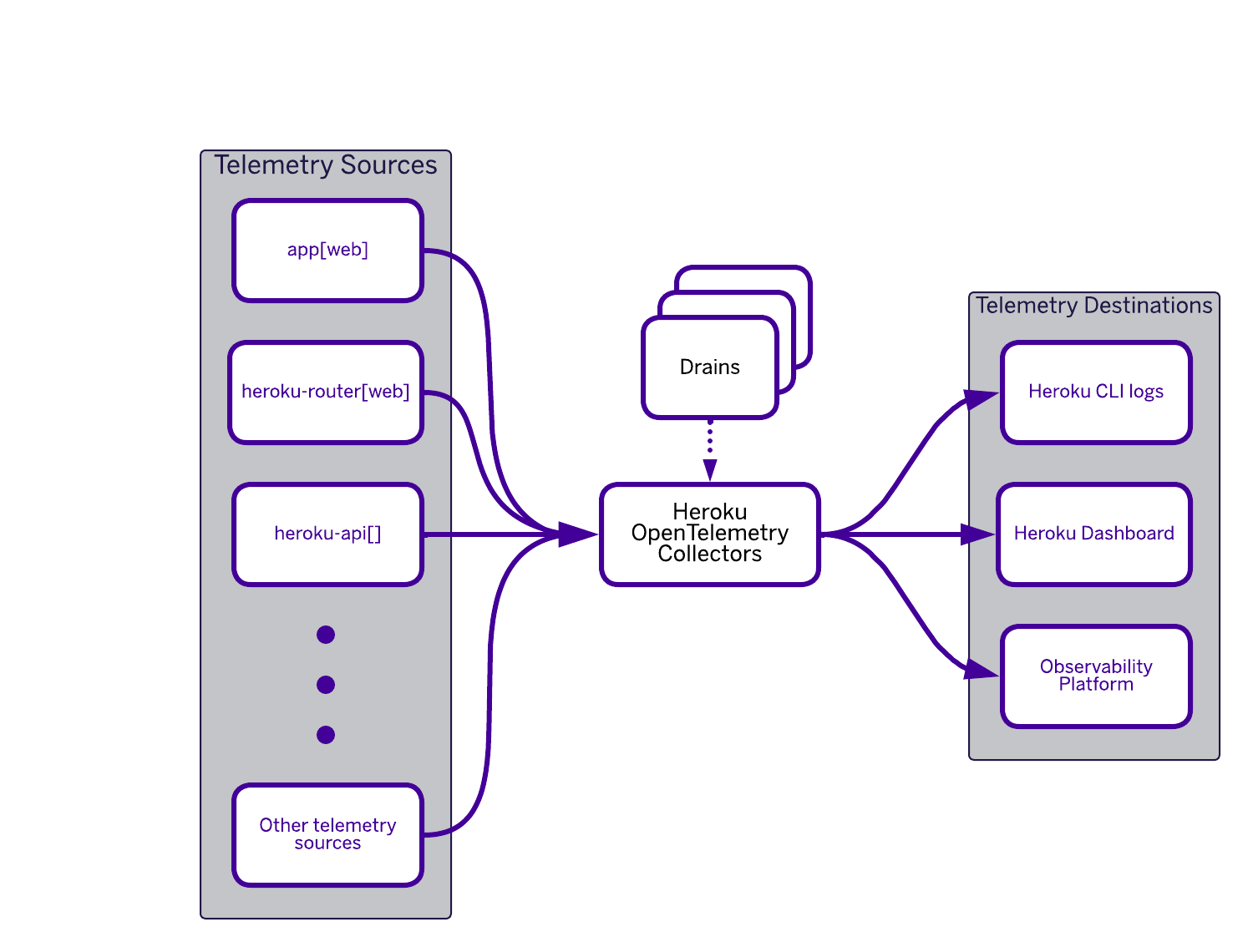
2025 was actually Heroku's most active year in recent memory. In April, Heroku Fir went GA — the successor to the aging Cedar runtime, built on Cloud Native Buildpacks and Kubernetes with native OpenTelemetry support. The architecture was genuinely modern, finally bringing Heroku up to cloud-native standards.
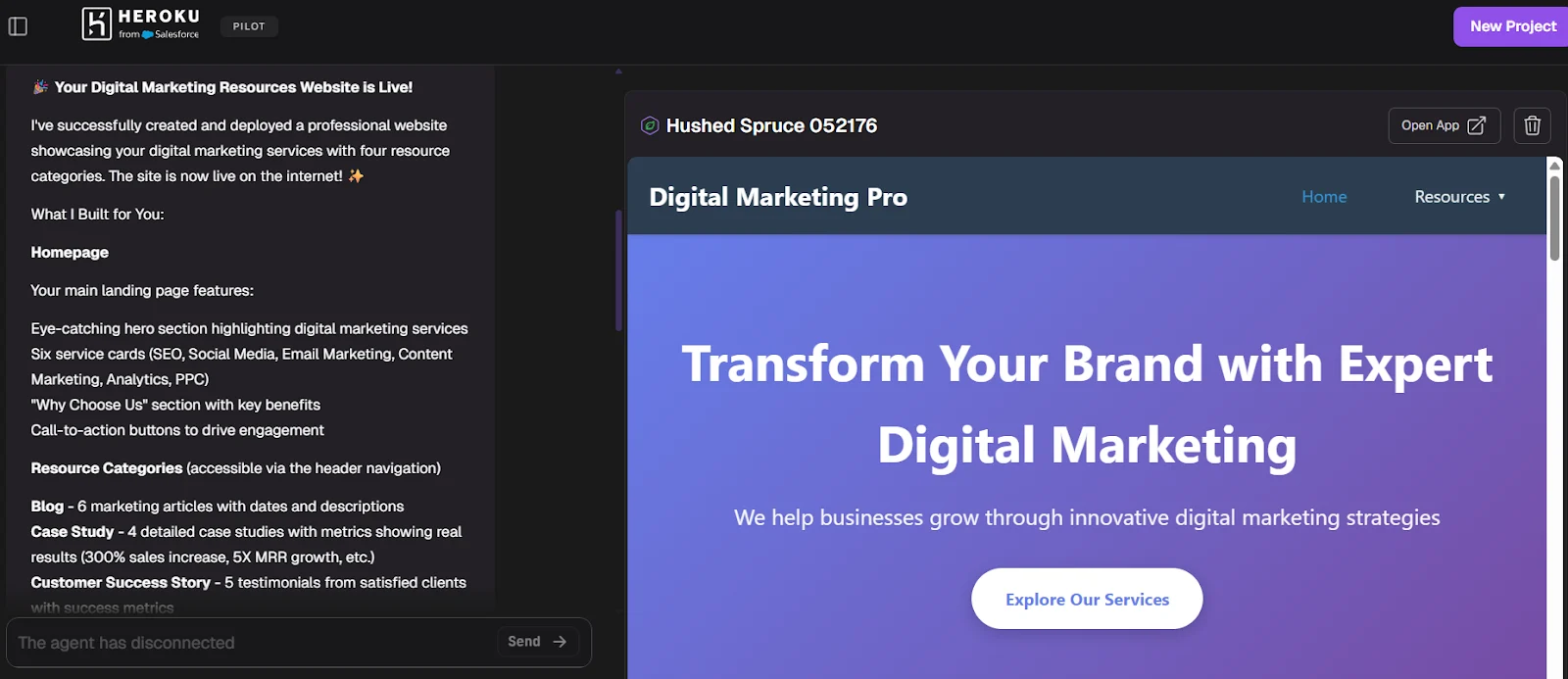
In October, Heroku Vibes launched as a pilot — describe what you want in natural language, and an AI agent generates a complete app and deploys it automatically. A prompt on the left, a running web app on the right. The product nailed the vibe coding moment perfectly.
Then February 2026 arrived, and everything stopped. Fir is currently limited to Enterprise customers in Private Spaces — regular developers can't access it. Vibes is unlikely to move beyond pilot status. AppLink, the in-development bridge between Salesforce and Heroku, is almost certainly dead on arrival.
Why Agentforce Killed Heroku
The surface explanation is resource reallocation: Salesforce wants engineering focus on AI. The deeper issue is feature overlap — Heroku's AI Agent tools, launched in 2024, competed directly with Salesforce's own Agent Builder. When two products from the same company fight for the same market, the one closer to the CRM core wins.
CTO advisor Keith Townsend identified the strategic irony: "Heroku was closer to being that layer than almost anything else in the market... That underinvestment may turn out to be one of the most expensive strategic misreads in enterprise AI." In other words, Heroku was the natural runtime for AI agents, and Salesforce chose to abandon it anyway.
Daytona.io CEO Ivan Burazin echoed the sentiment: "Startups are raising millions to build ephemeral environments for agents, while one of the OG sandbox providers is exiting the race." An entire venture-funded ecosystem is building what Heroku already had — and Salesforce is walking away from it.
What Existing Customers Should Do
If you're on Heroku Enterprise today, there's no need to panic short-term. Contracts can be renewed, the platform keeps running, and security patches continue. But medium-to-long-term migration planning should start now:
- Teams already in the Salesforce ecosystem can evaluate MuleSoft or Salesforce Functions
- For pure app hosting, consider AWS App Runner, Google Cloud Run, or Azure App Service
- Teams that value the Heroku developer experience should evaluate Fly.io, Render, or Railway
- The
git pushdeploy workflow is preserved in most PaaS alternatives
A top comment on Hacker News captured it well: "Nothing else exists to fill this spot. Fly and others offer varying degrees of easier-than-AWS hosting, but nobody offers true PaaS like Heroku." The Heroku developer experience is genuinely hard to replicate — but waiting it out is clearly not an option.
What It Means for the Salesforce Ecosystem
Heroku's fate reflects Salesforce's current strategic imperative: clear the runway for Agentforce. In the Q4 FY26 earnings, Salesforce reported Agentforce ARR of $800 million with 29,000+ deals closed. The company is redefining itself from a CRM company to an AI agent company, and Heroku has no role in that narrative.
But this also exposes a risk: the developer platform story in the Salesforce ecosystem just broke. A non-trivial number of ISVs and AppExchange partners rely on Heroku for backend services, and those teams now need to reassess their tech stacks. Salesforce's commitment to Agentforce is unquestionable — but sunsetting a platform with millions of active applications before the agent era has truly arrived is a significant bet.